Spa 1101 - F08
Guide for the Midterm
2. The Alphabet and Pronunciation: Can you recognize and pronounce each letter of the alphabet in Spanish? Do you remember how to divide a word into its basic syllables? Where does the natural accent fall in Spanish? Do you remember the special rules of pronunciation for letters like "g", "c", "j", "ll", "rr", or "y"?
3. Conversation and fundamentals: How many survival questions or commands have we learned to use in the classroom? How many greetings and expressions of courtesy have we learned? How do you express the “do you” question in Spanish? Where does the subject pronoun go in a question versus an answer? When do you need to use the double “no” in your answer? How many pairs of basic conversation question-answer combinations can you come up with in Spanish? Have you skimmed the textbook for survival questions? For example: ¿qué haces?, ¿Quién es? ¿A qué hora…..?, ¿Cómo son tus amigos? ,¿dónde estás a las siete?, ¿De dónde eres?, ¿Quiénes somos?, ¿Qué hay en la clase?, ¿Cuál es tu cumpleaños?, and ¿Qué tal? Can you answer these questions? Can you write a simple dialogue between two people in both a formal and informal situations? Are you keeping track of all the small changes in Spanish (for instance, the a+el=al or de +el = del combination, noun-adjective agreement, noun-verb agreement)? Why is noun-adjective and article-noun agreement so important in Spanish? What rules will help us determine the correct use of an article or an adjective? Are certain nouns always feminine or masculine? What is the difference between a definite and indefinite adjective?
4. Numbers and time: Can you count and spell the numbers between 0 and 199? How would you tell someone your phone number in Spanish? How do you pair numbers stating your telephone number? Can you tell time and distinguish when to use “son las” as opposed to “a la”? How do you express AM or PM?
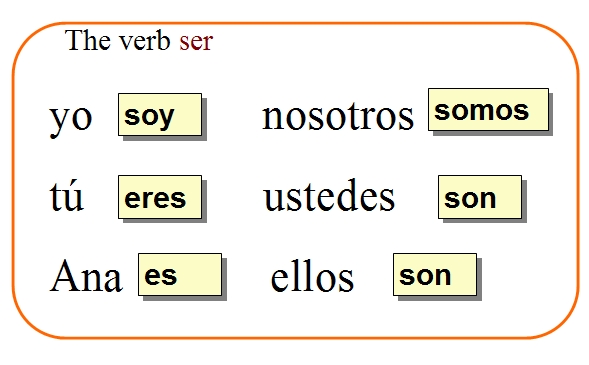
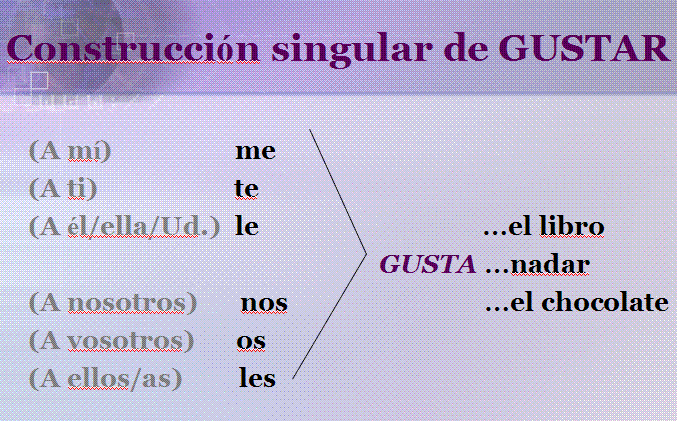
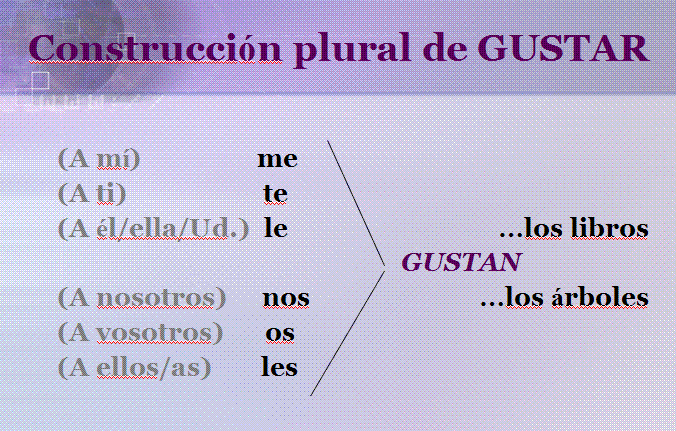
5. Verbs: What are the subject pronouns in Spanish? What are the forms of the verb "ser"? What does "hay" mean in Spanish? What are the forms of “estar”? When do you use “ser” versus “estar”? Have you studied all your AR verbs? Have you been drilling your AR verbs with verb cards? How do we use the sentence structure "me gusta/n" ( 1 , 2 )? What should you know about the indirect object pronouns “le” and “les”? Can you answer the question: ¿Qué haces?, ¿Qué te gusta hacer?, ¿Qué música te gusta más?